Backroads & Bygone Days: A Kelly’s Roadside Gossip History Series
Last week, we explored how some of these little Illinois farming towns got their names. This week, we’re traveling even further back, before the towns and farms took shape.
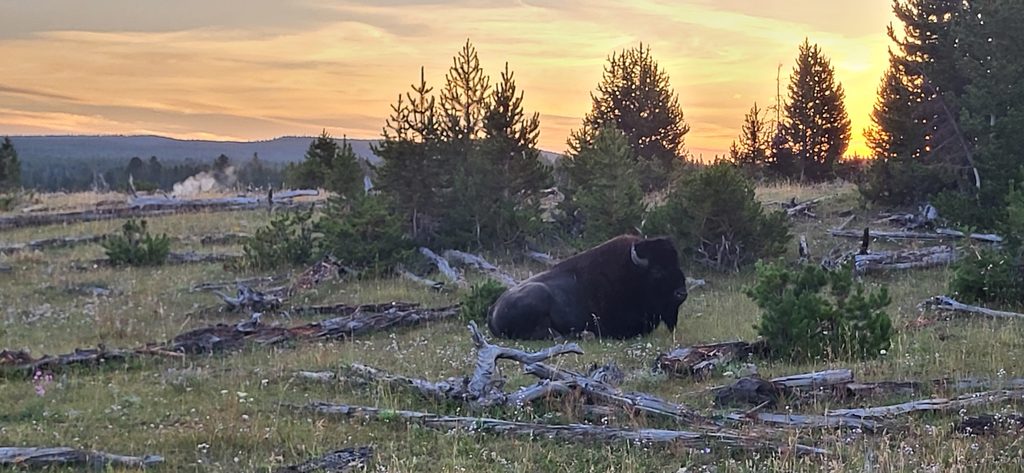
Can you imagine buffalo roaming the countryside around Laura, Illinois? I certainly couldn’t. I’ve seen bison out West in state parks, and they’re magnificent animals. But picturing them wandering across the same countryside where I grew up? That’s something entirely different.
Yet while researching the early history of Peoria County, I came across a story that made me look at our familiar Illinois landscape in a whole new way. It involved a little boy, his dog, and some old buffalo bones.
And that was only the beginning.
A Little Boy and the Buffalo Wallows
In 1907, George Belford shared his family’s history in History and Reminiscences, published by the Old Settlers’ Union of Princeville and Vicinity.
Among his childhood memories was an unusual discovery.
While walking near a sod house with his dog, young George came upon old buffalo wallows containing bleached bones. He believed the animals had died many years earlier, perhaps after becoming trapped in mud or suffering injuries. We can’t know exactly what happened to those animals. But his recollection offers a fascinating glimpse of a landscape very different from the one we recognize today.
Before the cornfields, grain bins, highways, and little farming communities, much of central Illinois was prairie. And the prairie had stories of its own.
Before the Farms and Fences
Long before European-American settlers established farms here, Indigenous peoples lived on, traveled through, and managed the Illinois landscape.
Prairie grasses, wildflowers, timber, streams, and wetlands formed a varied environment that supported wildlife and human communities. My research into the 1921 Peoria County Soils report revealed just how much the land’s ancient geological history influenced its later use.
Glaciers reshaped the terrain, leaving deposits that helped form the soils farmers would eventually cultivate. But fertile soil didn’t automatically mean easy farming.
Early settlers needed water, timber for building and heating, and land they could prepare for crops. The dense roots of prairie grasses made breaking new ground especially difficult.
And then there was fire.
When the Prairie Was on Fire
George Belford remembered prairie fires that swept across the countryside near the future community of Laura and toward Rochester.
Imagine looking across miles of open grassland and seeing flames approaching. These weren’t little brush fires. The fires could threaten fences, homes, and fields. Belford recalled families using backfires—deliberately burning vegetation ahead of an approaching fire—to protect their property.
Reading that account made me think about how different life must have been before the land was divided into the fields and roads we know today. The prairie was beautiful, but living on it required constant attention to the forces of nature.
Building a Home Before Building a Farm
One of the early families associated with Millbrook Township was that of William Metcalf.
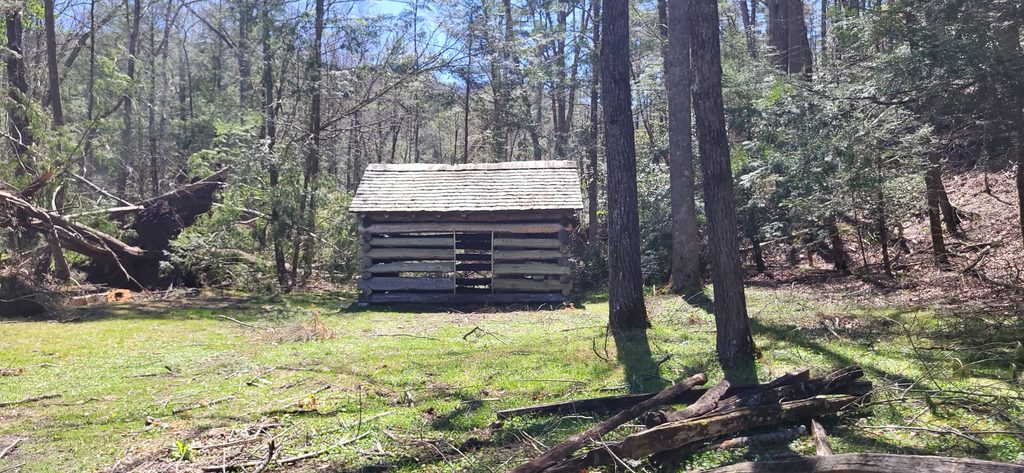
According to the township’s historical accounts, Metcalf came from Ohio in the 1830s and prepared a cabin and a small fenced field before moving his family onto the property. Think about what that involved.
There was no lumberyard down the road, no tractor waiting in the shed, and no local hardware store where a settler could pick up everything needed to start a farm. A family needed shelter, fencing, food, tools, and a way to survive until the land could begin producing.
It wasn’t simply a matter of purchasing acreage and planting seeds. Establishing a farm was a family undertaking, and success was far from guaranteed.
Interestingly, I remember my mother talking about a Metcalf family when I was growing up. I don’t know whether they were descendants of those early settlers, but finding that familiar surname in these old records certainly caught my attention.
Sometimes history feels a little closer to home than we expect.
Survival Came First
Another account that caught my attention was The Christian Miller Family, written by Louis Auten in 1908.
The account describes a family whose early food supply depended heavily on wild game, with little access to the kinds of fruit we take for granted today. Imagine trying to feed a household when you couldn’t simply go to the grocery store. Families relied on what they could hunt, grow, preserve, trade, or obtain from others.
The Miller family’s experience reminds us that pioneer life wasn’t just about acquiring land. It was about surviving long enough to make that land into a home. And not every family experienced settlement in the same way. Their circumstances, resources, and hardships varied. That’s why these individual stories matter. They help us see the people behind the dates.
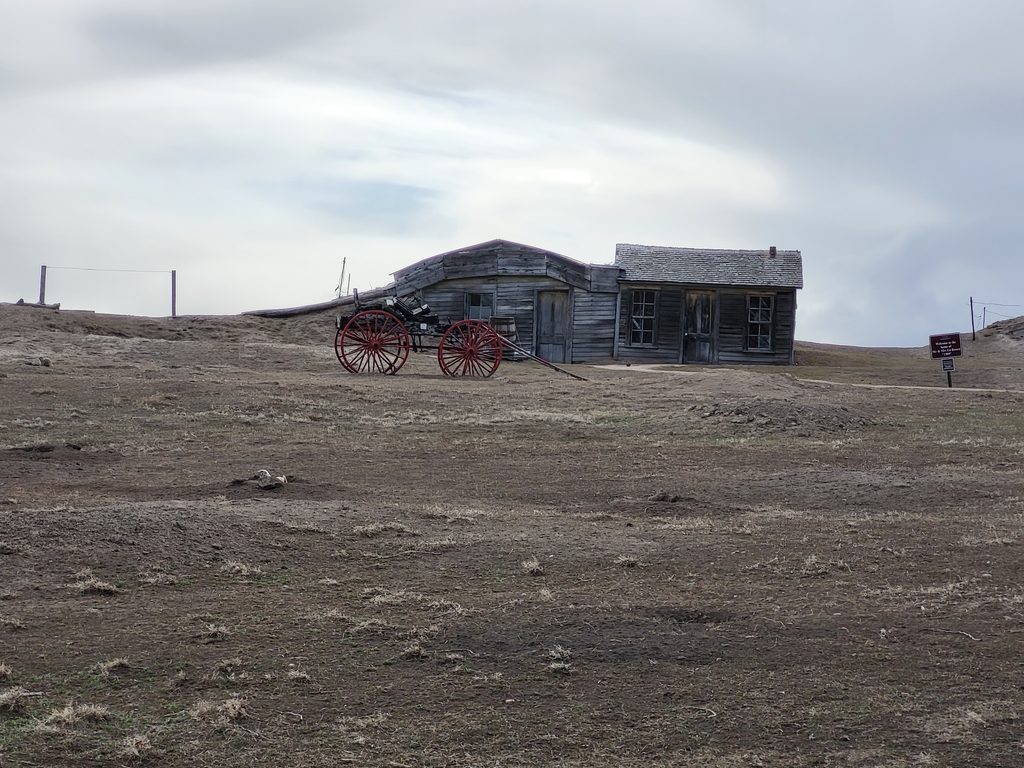
Old wooden homestead with antique red-wheeled wagon near Philip South DakotaWhen Every Ear of Corn Mattered
One of my favorite discoveries came from George Belford’s memories of his family’s corn-shelling work.
He remembered his mother using a piece of tin punched with holes and fastened to a board. She rubbed ears of corn against its rough surface to remove the kernels. The children helped finish shelling the corn. After several evenings of work, the family could accumulate enough for their father to haul a load to Peoria.
Can you imagine how long that must have taken?
Today, enormous machines can harvest and process quantities of corn that would have been unimaginable to those early families. But back then, even preparing corn for market could mean evenings of work involving the entire household. And that is something I find especially meaningful about these old accounts.
Farming wasn’t just a man’s work in the field. Women and children contributed labor that helped keep the household and farm going. Every pair of hands mattered.
More Than a Piece of Land
The Belford family history also recalls a household offering shelter to travelers during a blizzard, despite having limited room.
That kind of hospitality helps us understand how people depended on one another. As settlers established homes, they also developed churches, schools, roads, mills, and gathering places. The communities that eventually became familiar names on our maps grew out of those connections.
And while pioneer life certainly wasn’t easy or ideal for everyone, the historical accounts preserve examples of hospitality, hard work, faith, and cooperation. Those are the human stories I want to keep exploring as we travel through the history of our small Illinois towns. Because farming history isn’t only about land and equipment.
It’s also about families.
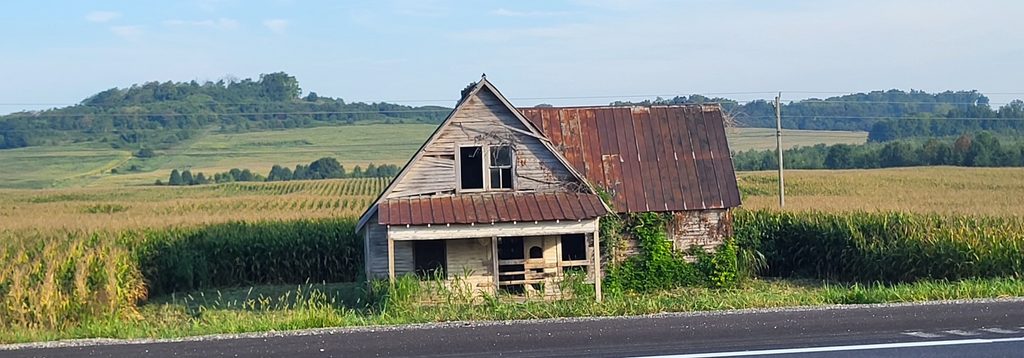
The Prairie Was Changing
As I read these old stories, I kept thinking about the countryside I know today.
The fields around Laura, Brimfield, Monica, Princeville, and Williamsfield didn’t always look the way they do now.
The prairie was gradually transformed as settlers built homes, fenced fields, planted crops, and established communities. But one enormous challenge remained.
How did farmers turn acres of thick, deeply rooted prairie grass into fields they could actually plow and plant?
The answer would help change Illinois agriculture forever. And in 1837, a blacksmith named John Deere developed a steel plow that became part of that transformation.
But that’s a story for our next trip down the backroads.
Next week, we’ll explore the plows, inventions, and agricultural changes that helped turn Illinois into one of America’s great farming regions—and eventually helped shape the grain elevators and small towns we recognize today.
Until then, the next time you drive past a cornfield, imagine what might have been standing there nearly two centuries ago. Maybe tall prairie grass. Maybe a herd of bison. Or perhaps a pioneer family, looking across the land and wondering what kind of future they could build.
Sometimes the most interesting history is hiding right beneath the places we pass every day.
Historical Sources
- History and Reminiscences, Volume I, Old Settlers’ Union of Princeville and Vicinity. “The Belford Family,” by George Belford (1907), pp. 51–53.
- History and Reminiscences, Volume I. “The Christian Miller Family,” by Louis Auten (1908), pp. 65–66.
- History and Reminiscences, Volume I. “Pioneers of Millbrook Township,” by W. H. Adams (1910), p. 99.
- History of Peoria County, Illinois (1902), Millbrook Township history.
- University of Illinois Agricultural Experiment Station, Peoria County Soils, Soil Report No. 19 (1921).
- Illinois State Museum, historical information on early Illinois agriculture and moldboard plows.
