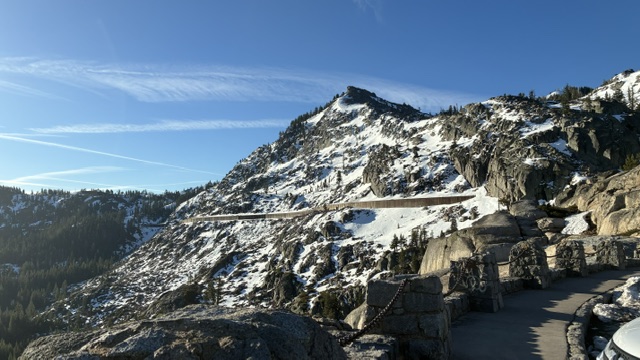
There are some places where the scenery is beautiful enough to make you stop and stare—until you learn the history and realize those mountains have some stories to tell. Donner Pass is one of those places.High in California’s Sierra Nevada near Truckee, Donner Pass is surrounded by granite mountains, pine forests, and spectacular views. Today, travelers cross the area by interstate and railroad, but getting through these mountains wasn’t always so easy.
And, of course, there’s that name.
The Donner Party Tragedy
Donner Pass takes its name from one of the most infamous journeys in American pioneer history.
In 1846, the Donner Party headed west toward California. After taking an alternate route that caused serious delays, the group reached the Sierra Nevada later than planned and became trapped by heavy snow. Food supplies dwindled as they remained stranded through the brutal winter. Many members of the group died, and some survivors eventually resorted to cannibalism. It’s a horrifying story, but also one that shows just how unforgiving these mountains could be to travelers who arrived unprepared or at the wrong time of year. It also proves something I’ve learned on my own travels: A shortcut isn’t necessarily a shortcut.
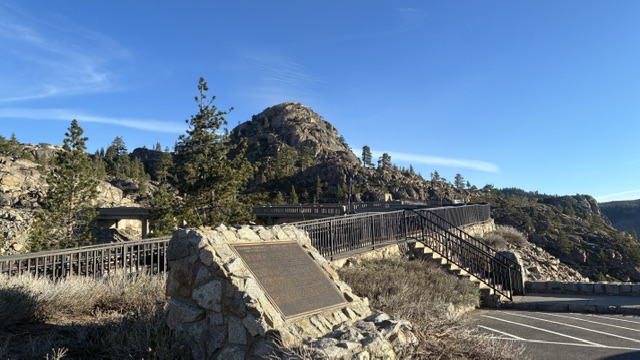
Crossing the Sierra Nevada
Despite the dangers, people continued pushing west. As migration increased and the California Gold Rush brought even more travelers toward the Pacific, finding reliable ways across the Sierra Nevada became increasingly important. Then came the railroad. Building the First Transcontinental Railroad through these mountains required workers to cut and blast their way through solid granite while dealing with difficult terrain and extreme winter weather.
Chinese workers played an enormous role in that achievement. Thousands worked on the Central Pacific portion of the railroad, performing some of the project’s most difficult and dangerous labor while also facing discrimination and unequal treatment. Their contribution is an important part of the history of Donner Pass—and of the railroad that eventually connected the country from coast to coast.
From Wagon Trails to Interstate 80
Transportation changed, but the mountains didn’t. Railroads eventually crossed terrain that had once stopped wagon trains. Roads followed, and today Interstate 80 carries cars and trucks through the Sierra Nevada near Donner Pass every day. But winter still gets the final say. Heavy snowfall can make travel difficult or dangerous, and modern travelers may encounter chain requirements, road restrictions, snowplows, or closures when conditions become severe. Apparently, nature didn’t get the memo that we built an interstate. I got to experience this route myself while traveling aboard the California Zephyr.
Donner Pass Today
Today, the area attracts travelers for reasons very different from those of the pioneers. Donner Lake and the surrounding Sierra Nevada offer beautiful scenery, hiking, climbing, skiing, and plenty of opportunities to explore the area’s history. Standing there today, it’s difficult to imagine what crossing these mountains must have been like without highways, weather forecasts, snowplows, heated vehicles, or a phone telling you there’s a Starbucks somewhere ahead. Visitors interested in the area’s history can also explore Donner Memorial State Park near Donner Lake.
The scenery is breathtaking.
The history is sobering.
And together they make Donner Pass one of those places that stays with you.
The Stories Behind the Scenery
That’s one of the things I enjoy most about traveling. Sometimes you arrive somewhere because the scenery caught your attention, and then you discover the stories hidden behind it. Donner Pass tells stories of survival, tragedy, determination, engineering, immigration, and the constant human desire to find a way forward. Today we can cross these mountains far more safely than the travelers who came before us.
But the mountains are still there.
And they still deserve our respect.
So, if you ever find yourself traveling through Donner Pass, enjoy the view—but take a moment to remember the people who crossed these mountains long before Interstate 80 made the journey considerably easier. And if somebody suggests taking a shortcut?
Maybe check the map first.